Health tips
Is Endoscopy Painful? What to Expect Before, During and After | Minerva Hospital
27 October 2026
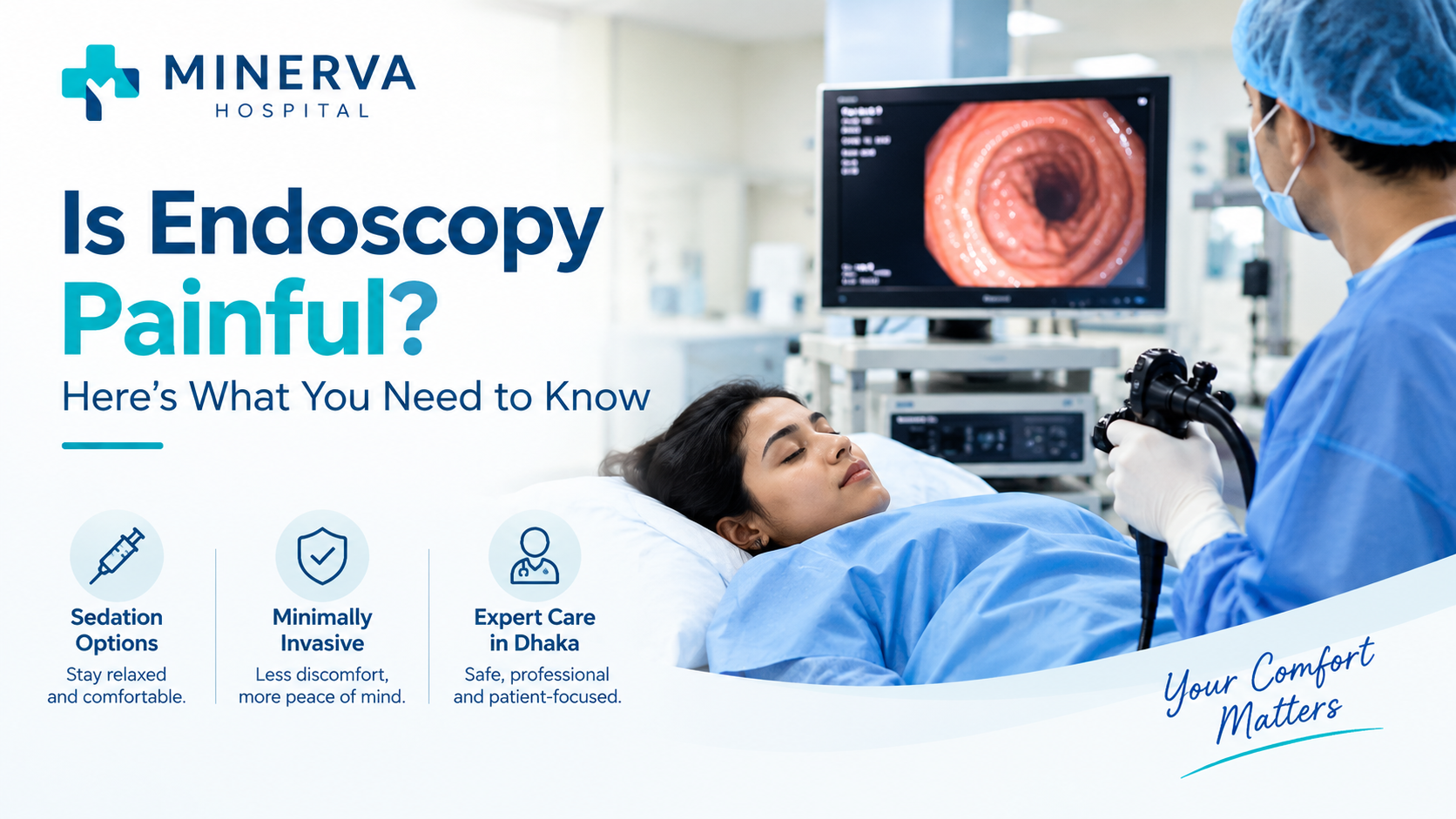
Quick answer: No, an upper GI endoscopy should not be painful. Most people feel pressure, an urge to gag as the tube passes the throat, and mild bloating afterwards. A numbing throat spray or sedation makes the experience much easier, and a sore throat usually settles within a few hours. You can ask the team to pause or stop the test at any time.
What is an upper GI endoscopy?
An upper gastrointestinal (GI) endoscopy, also called gastroscopy or OGD, is a test in which a doctor passes a thin, flexible tube with a light and camera through your mouth to look at your food pipe (oesophagus), stomach and the first part of the small intestine. It helps find the cause of persistent heartburn, upper abdominal pain, difficulty swallowing, vomiting, bleeding and unexplained anaemia. For a neutral overview, see the NIDDK guide to upper GI endoscopy.
If your doctor is deciding between endoscopy and colonoscopy, our guide to the differences between endoscopy and colonoscopy explains which test looks at which part of the digestive tract.
Is endoscopy painful?
For most people, no. The tube is thin and does not block your breathing. The most common complaint is not pain but a feeling of pressure and an urge to gag as the scope passes the back of the throat. The NHS also states that a gastroscopy should not be painful, and that you can ask for it to be stopped at any time (NHS: what happens during a gastroscopy).
Discomfort varies from person to person. It is usually higher for people who are very anxious, who have a strong gag reflex, or who have not followed the fasting instructions. Talking to your doctor beforehand about these worries makes a real difference.
Throat spray vs sedation: which helps more?
Two comfort options are commonly offered. Your doctor will recommend one based on your health, your anxiety level and the reason for the test.
| Option | How it works | Good to know |
|---|---|---|
| Numbing throat spray | A spray numbs the back of your mouth and throat so the tube passes more easily. You stay awake. | You may leave sooner after the test and may not need an escort. Your throat stays numb for a short time, so you must wait before eating or drinking. |
| Sedation | Medicine given through a small tube in your arm makes you drowsy and relaxed. Many people remember little of the test. | You need an adult to take you home. Do not drive, work with machinery or make important decisions for the rest of the day. |
If you have heart, lung or breathing problems, or take blood thinners or diabetes medicines, tell your doctor in advance so the safest option can be chosen.
What it feels like, step by step
- Before the test: You will have an empty stomach. Fasting for around six hours is common, but follow the exact instructions you are given. Remove dentures and loose items.
- Comfort measures: You receive throat spray, sedation, or both. A small plastic mouthguard protects your teeth and the scope.
- Position: You lie on your left side, relaxed, breathing normally.
- Passing the scope: You may feel pressure at the back of the throat and an urge to swallow or gag. This usually passes within seconds once the scope is down.
- Examination: Air is gently passed into the stomach to give a clear view, which can cause a bloated feeling or belching. A suction tube removes saliva, so you do not need to swallow.
- Biopsy, if needed: The doctor may take a tiny tissue sample. This is not felt.
- Finish: The scope is removed and you rest in a recovery area.
The test itself is usually short; the NHS gives about 15 to 45 minutes, with a total hospital stay of around four hours including preparation and recovery. Your own timing at Minerva Hospital may differ.
How you may feel afterwards
- A sore or scratchy throat for a few hours
- Bloating, belching or mild cramping from the air used
- Drowsiness if you had sedation
You can usually eat once the throat numbness wears off and your doctor says it is safe, starting with light food and fluids. If you had sedation, rest for the day. If a biopsy was taken, results usually take some days, and your doctor will explain what they mean.
Tips to make your endoscopy easier
- Tell the team you are nervous. They can slow down, explain each step and adjust sedation.
- Follow the fasting instructions exactly. An empty stomach means a clearer view and less gagging or vomiting.
- Breathe slowly through your nose and keep your shoulders and jaw loose.
- Let saliva drain into the suction instead of trying to swallow.
- Share your medicine list and any allergies or previous reactions to sedation.
- Bring an adult companion if you plan to have sedation.
When to call a doctor
Endoscopy is generally very safe when done by trained specialists, and serious problems are rare. Seek medical help promptly if, after the test, you have:
- Severe or worsening chest, throat or abdominal pain
- Difficulty swallowing or breathing
- Fever or chills
- Vomiting blood, or black or bloody stools
- Persistent vomiting
Endoscopy at Minerva Hospital, Dhaka
At Minerva Hospital, upper GI endoscopy is available through our GastroLiver Care service and the Liver & Gastroenterology department. You can view the test details and current price on our Upper GI Endoscopy (OGD) page, and see other investigations your doctor may advise on our diagnostic tests page.
Before the test, our team explains the procedure, discusses sedation or throat spray, and answers your questions. If you also need a lower-GI test, read our guide on colonoscopy in Dhaka: preparation, procedure and recovery.
Note for the publishing team: replace the colonoscopy URL with the live blog URL, add the reviewing doctor's name, designation and BMDC number in the header, and confirm the facilities and sedation options your endoscopy suite actually offers.
Frequently asked questions
Is endoscopy painful?
Upper GI endoscopy should not be painful. Most people feel pressure, a gagging sensation or mild bloating, which is reduced by a numbing throat spray or sedation. A sore throat for a few hours afterwards is common.
Will I gag during an endoscopy?
You may feel an urge to gag as the scope passes the back of the throat. Throat spray numbs the area, sedation makes you drowsy and relaxed, and slow breathing through the nose helps.
Is sedation or throat spray better for an endoscopy?
Neither is better for everyone. Sedation keeps you relaxed and you may remember little of the test, but you need an adult to take you home. Throat spray lets you stay awake and leave sooner. Your doctor will help you choose.
Can the endoscopy be stopped if I am uncomfortable?
Yes. You can signal the team at any time if you are uncomfortable, and they can pause or stop the procedure.
What will I feel after an endoscopy?
You may have a sore throat, bloating or belching from the air used during the test. If you had sedation you may feel drowsy for the rest of the day and should not drive.
When should I call a doctor after an endoscopy?
Seek help promptly for severe chest, throat or abdominal pain, fever, difficulty swallowing or breathing, vomiting blood, or black or bloody stools.
Worried about your endoscopy? Talk to our specialists
Call Minerva Hospital to ask about appointments, sedation options and preparation.
Call 09617-999222Or book an appointment with the Gastroenterology department.
This article is for general information only and does not replace personal medical advice, diagnosis or treatment. Always follow the instructions of your treating doctor, and seek emergency care if you have severe symptoms.