
Health tips
What Is the Difference Between a Gastroenterologist and a Liver Specialist?
18 September 2026
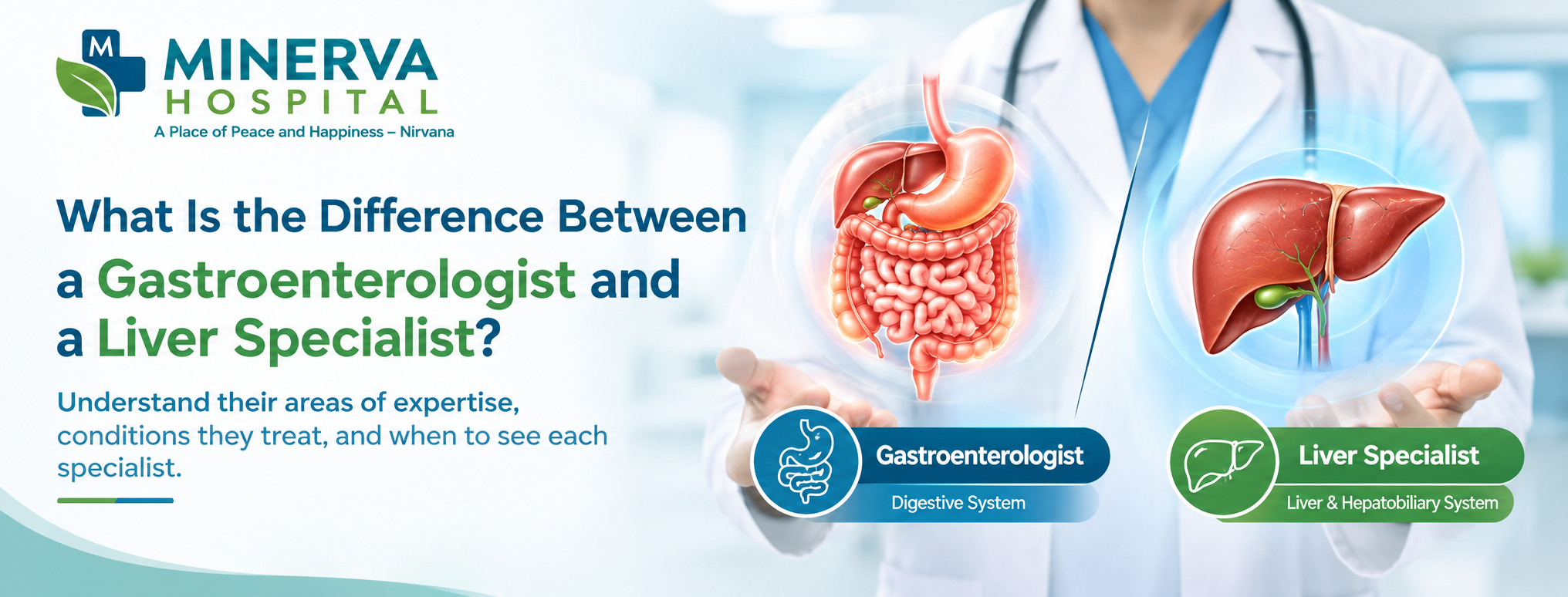
If you have ongoing digestive problems, liver-related symptoms, or abnormal liver test results, you may wonder whether you should see a gastroenterologist or a liver specialist. Although both doctors deal with conditions affecting the digestive system and liver, their areas of expertise can differ.
At Minerva Hospital, patients can access specialist medical care for digestive, liver, and gastrointestinal conditions with appropriate evaluation and diagnostic support.
What Is a Gastroenterologist?
A gastroenterologist is a medical specialist who diagnoses and treats conditions affecting the digestive system, including the:
- Esophagus
- Stomach
- Small and large intestine
- Liver
- Gallbladder
- Bile ducts
- Pancreas
Common conditions treated by gastroenterologists include gastritis, acid reflux and GERD, peptic ulcers, IBS, inflammatory bowel disease, fatty liver, hepatitis, gallstones, and other digestive disorders.
Gastroenterologists may also perform procedures such as endoscopy and colonoscopy to investigate digestive symptoms.
What Is a Liver Specialist?
A liver specialist focuses primarily on diseases and disorders affecting the liver and related biliary system. In many cases, this specialist is a gastroenterologist with additional expertise in liver diseases, often referred to as a hepatologist.
A liver specialist may evaluate and manage conditions such as:
- Fatty liver disease
- Hepatitis B and hepatitis C
- Liver cirrhosis
- Jaundice
- Liver inflammation
- Abnormal liver enzymes
- Alcohol-related liver disease
- Liver fibrosis
- Other chronic liver conditions
Gastroenterologist vs. Liver Specialist: What Is the Difference?
The main difference is the area of focus. A gastroenterologist treats a broad range of digestive conditions, while a liver specialist focuses more specifically on liver and biliary diseases.
| Gastroenterologist | Liver Specialist |
|---|---|
| Treats a broad range of digestive disorders | Focuses mainly on liver and biliary diseases |
| Treats stomach and intestinal conditions | Treats complex or chronic liver conditions |
| Performs procedures such as endoscopy and colonoscopy | Evaluates liver function, damage, and disease progression |
| May also treat common liver conditions | Provides more specialized liver-focused care |
A gastroenterologist can treat many common liver problems. However, a hepatologist or liver-focused specialist may be appropriate when liver disease is complex, chronic, or requires specialized management.
When Should You See a Gastroenterologist?
Consider consulting a gastroenterologist if you have persistent:
- Abdominal pain
- Acidity or heartburn
- Bloating or indigestion
- Changes in bowel habits
- Chronic constipation or diarrhea
- Blood in the stool
- Difficulty swallowing
- Unexplained digestive problems
Your doctor can determine whether further tests, such as an endoscopy, colonoscopy, ultrasound, or laboratory tests, are needed.
When Should You See a Liver Specialist?
A liver specialist may be appropriate if you have:
- Persistently abnormal liver function tests
- Fatty liver with concerning findings
- Hepatitis B or C
- Jaundice
- Suspected liver fibrosis or cirrhosis
- Chronic liver disease
- Unexplained liver enlargement
- A history of significant liver problems
If you are unsure which specialist you need, a gastroenterologist can initially evaluate your symptoms and recommend the appropriate specialist or investigations.
Can a Gastroenterologist Treat Liver Disease?
Yes. Gastroenterologists receive training in diseases of the liver as part of their specialty. Many gastroenterologists diagnose and manage common liver conditions such as fatty liver disease and viral hepatitis.
For more advanced or complicated liver conditions, your doctor may recommend consultation with a liver-focused specialist or a multidisciplinary team.
Gastroenterology and Liver Care at Minerva Hospital
At Minerva Hospital, patients can receive medical evaluation for a wide range of gastrointestinal and liver conditions. Depending on your symptoms and medical history, a specialist may recommend appropriate laboratory tests, imaging, endoscopy, colonoscopy, or other diagnostic procedures.
Early evaluation can help identify the cause of persistent digestive or liver-related symptoms and guide appropriate treatment.
Frequently Asked Questions
Is a gastroenterologist the same as a liver specialist?
Not exactly. A gastroenterologist treats a broad range of digestive-system conditions, while a liver specialist focuses primarily on liver and related biliary diseases. A hepatologist is a doctor with specialized expertise in liver disease.
Should I see a gastroenterologist or liver specialist for fatty liver?
For many people with fatty liver, a gastroenterologist can provide appropriate evaluation and management. If the condition is advanced or complicated, a liver specialist may be recommended.
Can a gastroenterologist treat hepatitis?
Yes. Gastroenterologists can diagnose and manage several types of hepatitis, including chronic viral hepatitis. Complex cases may require specialized liver care.
What tests may be needed for liver problems?
Depending on your symptoms, doctors may recommend liver function tests, hepatitis testing, abdominal ultrasound, FibroScan, CT/MRI, or other investigations.
When should I see a doctor for digestive or liver symptoms?
Persistent abdominal pain, jaundice, unexplained weight changes, abnormal liver tests, blood in stool, ongoing vomiting, or chronic digestive problems should be medically evaluated.
Conclusion
The key difference between a gastroenterologist and a liver specialist is their primary area of focus. Gastroenterologists manage a broad range of digestive and gastrointestinal conditions, while liver specialists concentrate more specifically on liver and biliary diseases.
If you are experiencing persistent digestive or liver-related symptoms, getting evaluated by the appropriate specialist can help identify the underlying cause and determine the next steps in care.